The Price of a Boat
By nine in the morning, Mara had removed every photograph from the boathouse except the pale rectangles they had left on the wall. Her sister arrived carrying two takeaway coffees, a gesture so carefully ordinary that Mara almost resented it more than an apology. Ellen put one beside the cash box and looked at the empty hooks. Outside, the river moved through its familiar sequence of silver, brown and silver again. They had spent their childhood waiting for it to settle on a colour. Ellen was thirty-four now, and Mara thirty-one. They were supposed to agree on the price of a boat.
"He can collect it here," Ellen said. Mara pushed the unsigned receipt towards her. "He has a trailer at the lower landing. I said we'd bring it." The buyer ran a small repair business. He had offered a fair price for their mother's last rowing boat, and neither sister could reasonably accuse him of stealing anything. Nevertheless, Ellen had arranged for a car to take her to the station at noon. Mara knew this because Ellen had asked whether there was reliable reception at the boathouse, as though the river might be responsible for making her miss another appointment.
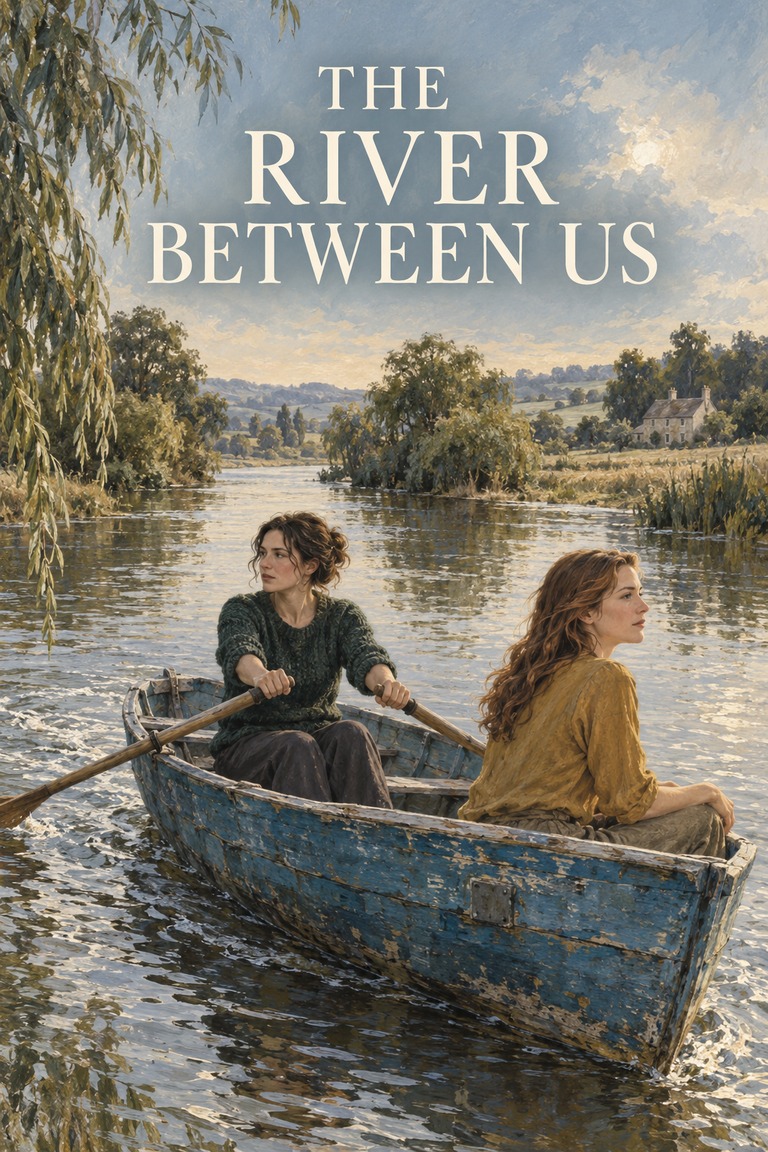
Their mother had moved inland to live with her brother, who had a warm flat and no steps. She had closed the boat hire business herself. There was no disputed inheritance, no dying instruction to make the sisters obedient. "Sell the boats," she had told them. "Keep what you want from the house. Don't keep things on my behalf." Mara had sold five boats already. The sixth lay beside the jetty, its blue paint fading towards grey. A narrow patch of green remained on one side, where Ellen had helped to paint it during a summer she remembered as almost unbearably happy.
Ellen looked at the river. "How long?" "An hour, perhaps a little more." "Perhaps is doing a lot of work there." Mara lifted the oars into their metal fittings. She knew Ellen had taken a week off work, paid for the house clearance and done three long journeys. She also knew that she herself had been here for the six years between those journeys. Knowledge did not cancel resentment. It merely gave resentment more precise measurements. "You can take the car," she said. "I'll bring the boat down alone." Ellen set both coffees inside the hull, beyond reach of the first small wave.
They carried nothing sentimental on board. There were two oars, a short rope, a waterproof bag for their phones and an old sponge beneath the rear seat. Ellen sat in the bow while Mara pushed them away. The jetty slipped behind her sister's shoulder. For a moment, the empty boathouse looked smaller than the one Mara had spent the week clearing, as though removing its contents had also removed a dimension. She took the first few strokes too forcefully. Ellen watched the approaching bend and waited until their wake had smoothed out. "I've moved the car to one," she said.
The Old Channel
At first they talked about quantities: the number of keys to return, the boxes remaining upstairs, the cost of sending a wardrobe inland. Mara rowed facing upstream, towards what they had left. Ellen faced the way they were going. As children, they had fought over these positions. Ellen wanted to see the next bend first; Mara wanted the oars because holding something useful made her feel less likely to be sent home. The arrangement had survived long after its original reasons had disappeared. Mara felt Ellen watching her hands and wondered whether even her blisters were being quietly assessed.
Beyond the willow trees, the river divided around a low island. Mara steered towards the narrow left-hand channel. "Didn't we always go right?" Ellen asked. "The left is quicker." "It used to be shallow." "It still is. There's enough water." Mara had taken this route with customers the previous spring. What she had not done was take it since the dry weeks at the end of summer. She could have admitted that distinction. Instead, she gave the oars two hard pulls. The boat slid forward, then stopped with a soft, lengthy scrape that sounded like someone opening a drawer full of sand.
Neither woman spoke. The river continued on either side of them, which made their own stillness seem deliberate. Mara tried to reverse. One oar stirred cloudy water; the other struck gravel. Ellen leaned over the side and saw the shallow ridge holding the boat beneath its middle. A length of half-submerged timber lay farther ahead, blocking the open end of the channel. "We should go back," she said. "We will." Mara pulled again. The hull barely moved. Mara rested the oars across her knees. A few loose grains of gravel rolled beneath the hull whenever either sister moved.
Ellen took off her shoes and rolled up her trousers. Mara told her to wait, but she was already lowering one foot over the side. The water reached her ankle, then her calf as she found a lower patch. She winced at the cold and held the boat steady while Mara moved towards the stern. Together they eased it backwards, a few inches at a time. On the third attempt, Ellen's heel sank into a pocket of soft mud. She lost her balance, caught the side and sat down abruptly in the water. Her laugh arrived before Mara could decide whether to laugh too.
The boat was free, but Ellen was soaked to the waist. Mara helped her back over the side, ashamed of how quickly she searched for a reason that this was not entirely her fault. "You should have waited," she said. Ellen pulled a strand of weed from her sleeve. "Yes. And you should have told me you weren't sure." Behind them, the channel looked perfectly navigable from a distance. Mara turned the boat into the wider branch. She did not say that their mother had once made exactly the same mistake. Sharing that memory now would have sounded like calling a witness for the defence.
They stopped at a grassy bank where an old path met the water. Ellen spread her coat over a fallen tree and wrung out the hem of her shirt. Mara opened the waterproof bag and offered her own dry jumper. It was too short in the sleeves, but Ellen put it on without comment. A dog barked somewhere beyond the fields. From this bank, the river sounded less like movement than continuous work. Mara checked the time: ten forty-seven. The lost minutes were not yet disastrous. That did nothing to prevent her from treating them as another debt she would eventually be asked to repay.
What Staying Cost
Ellen was shivering, though less than before. She examined a small split in the boat's upper edge, above the waterline. "We did that," she said. Mara followed her finger. "You did that. You dropped your end." "You let go." "I was eleven." "I was fourteen." They had carried the boat badly, quarrelled for an hour and then concealed the damage beneath a strip of paint. Their mother had found it that evening. Instead of choosing a guilty daughter, she had shown them how to patch it. The repair was still visible: a slightly raised rectangle that neither of them had noticed while discussing the price.
"Are you angry because I'm leaving today?" Ellen asked. Mara picked a burr from her sock. "It would be strange if you stayed now." Ellen waited. That was worse than an argument; Mara had prepared answers for an argument. "You always get to be the one who leaves," she said at last. "I get instructions for things you won't be here to finish." Ellen looked across the fields, towards the roofs beyond the trees. "I didn't tell you to stay." "No. You just knew I would." There it was, said plainly enough to lose some of the dignity Mara had given it in her head.
For years, Ellen had believed that Mara liked running the boats. Mara had sent her photographs of bright mornings, children carrying life jackets and customers eating sandwiches on the jetty. She had not sent pictures of the winter bookkeeping, the broken heater or herself staring at job advertisements after midnight. Ellen had asked whether she needed help; Mara had said no. Neither of them was innocent of that arrangement, and neither had understood its full terms. "I thought you wanted this," Ellen said. "I did," Mara replied. "That's what makes it difficult. I wanted it, and then I didn't, and by then everyone knew who I was."
Ellen sat down beside the boat. "I could have asked a better question." Mara had expected a defence of railway fares and limited holiday days. The absence of one left her with nowhere to direct the speech she had been carrying. She brushed mud from the oar handle. "I could have given you a different answer." It was not forgiveness, and it did not divide six years into equal shares. Mara had never imagined Ellen beside the boat in her borrowed jumper, with nothing prepared to say. For once, she could not put her sister's answer into the story she already knew. Ellen pulled the short sleeves over her wrists and asked what Mara wanted to do next.
Mara had been offered a winter job at a hostel near the coast. The work was ordinary: checking guests in, cleaning rooms, making breakfast when someone else was ill. What attracted her was not the coast but the fact that nobody there would know which daughter she was. She had not accepted. "It doesn't sound like much," she said. Ellen considered that. "Does it have to?" Mara looked at the raised patch on the boat. She had imagined needing an impressive destination to justify leaving a useful life. The hostel had become smaller each time she explained it to herself, until it seemed too small to enter.
A message arrived from the buyer. He would be at the landing until three, and after that his neighbour could let them through the gate. Ellen asked Mara to pass her the bag. She asked the driver to collect her bag from the boathouse and meet them at the lower landing, then put the phone away. "My car can come at three," she said. "I can get the later train." Mara looked at her. "You don't have to miss it." "I know. I'm changing it." Beyond the island, sunlight appeared on the wider channel. Ellen put her wet shoes on, grimacing, and stood up. "I'd like a turn with the oars. I remember the part where you complain about my steering."
A Different Weight
They launched again, with Ellen in the rowing seat and Mara facing downstream. At first Ellen pulled too quickly, without allowing the boat to travel between strokes. Mara almost corrected her, then asked whether she wanted a suggestion. Ellen did. A few minutes later, they found a pace that did not require either of them to prove anything. Mara watched a farmhouse emerge above the bank and disappear behind it. She had known that roof for most of her life. Seen from this direction, it had a second chimney. The discovery was trivial, but she could not stop looking until the trees hid it.
Near the old mill, the wind turned against them. Ellen's strokes grew uneven. Mara offered to take over, and this time Ellen accepted before exhaustion could make the decision for her. Changing seats was awkward. They moved slowly, holding the boat's sides, and laughed when Mara nearly sat on the sponge. It was the first time all morning that their laughter had no injured person attached to it. As Mara began rowing, Ellen told her about the flat she shared with a friend, the upstairs neighbour who practised trumpet scales, and the mornings when she missed having somewhere obvious to belong.
Mara listened without trying to turn those complaints into evidence that Ellen should have stayed. "You never said," she told her. Ellen raised an eyebrow. "You sent pictures of the river." There was no accusation in it this time. Mara imagined the two collections side by side: her bright water, Ellen's restaurant meals, each carefully selected to reassure the other. They had been passing these small proofs of happiness back and forth, and then mistaking them for complete lives. The thought made Mara uncomfortable. It also made her curious about the things Ellen had left outside the frame.
The buyer was waiting at the lower landing with a flask. He helped them tie up, noticed Ellen's wet trousers and poured two cups of tea without asking for the story. While Mara drank, Ellen walked him along the side of the boat, pointing out the old patch. "It's sound," she said. "But you should see it." He ran his thumb over the raised edge, then checked it from inside. He was going to repair the paint and use the boat for himself. His daughter liked the river, he said, although she was still more interested in dropping things into it than in learning to row.
He counted the agreed money onto the bonnet of his van. Mara counted it again, slowly. Until that moment, she had kept expecting the sale to reveal itself as a mistake: the price would be insulting, the buyer careless, the boat unwilling to leave. Instead, there was a reasonable sum, a man with paint on his cuffs and the need to sign a receipt. Ellen had already signed her half. Mara added her name, pressing harder than she intended. Nothing remarkable happened. The boat remained beside the landing. Yet when she stood upright, she discovered that she was no longer listening for customers on the path behind her.
They waited for the car on a bench above the river. Ellen's shoes made a faint squelching sound whenever she shifted her feet. Mara opened the message from the hostel and wrote that she would take the job. Before sending it, she asked Ellen to check the starting date against the week they still needed to finish clearing the house. Ellen read it, suggested one change and handed the phone back. This time the help was neither an instruction nor an offence. Mara sent the message. Below them, the buyer lifted one oar, tested its weight and set it carefully in place.
When the car arrived, Ellen found her bag on the back seat and moved it into the boot, leaving space beside her. "Are you coming to the station?" Mara looked back towards the water. She still had keys to return and a wardrobe to measure. She would go back that afternoon, and there would be days when returning felt like being trapped. But she did not need to practise those days in advance. "I'll come," she said. On the way, Ellen asked whether the hostel had a view of the sea. Mara admitted she had forgotten to ask. Her sister laughed, and Mara began to laugh with her, before either of them knew what the view would be.