The Opening Arrangement
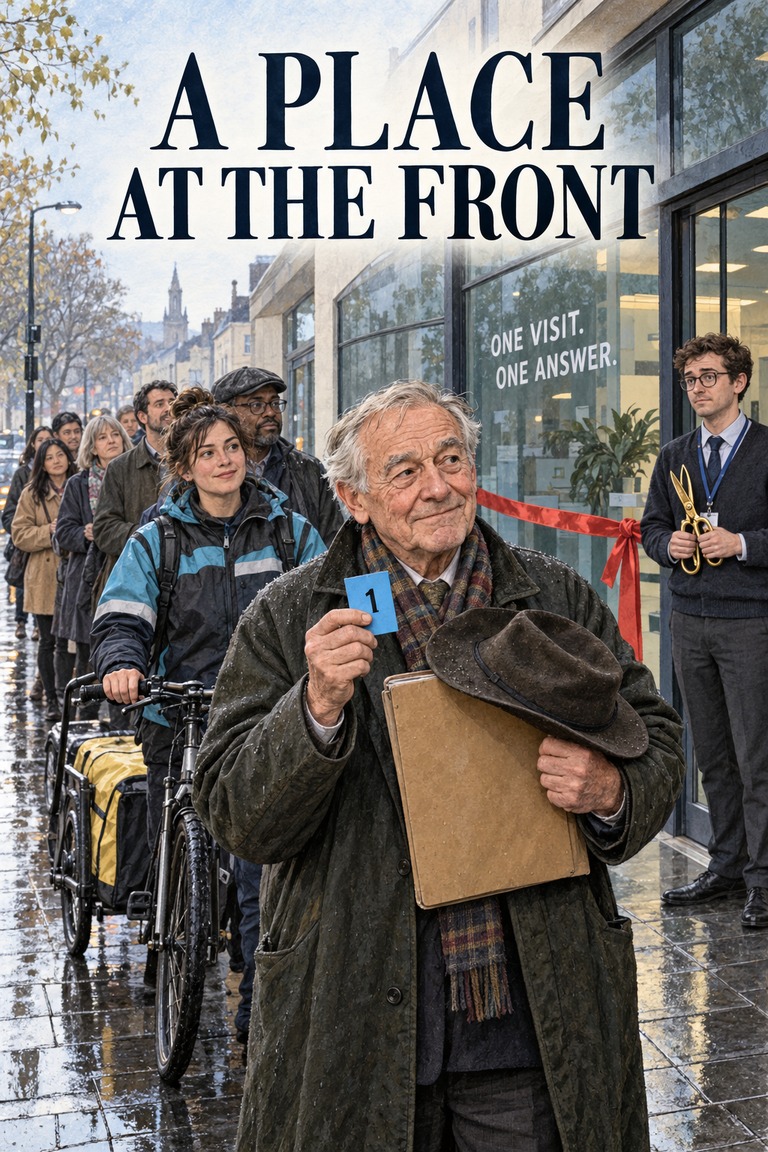
At eight seventeen, the queue was already longer than the ribbon. Corin had allowed six metres of red silk for the opening ceremony and precisely no space for people to wait. In the drawing he had submitted, the pavement contained a tree, two reporters and a pleasantly purposeless couple. The real pavement contained eleven residents and a bicycle trailer; the man at the front was protecting a folder from the drizzle with his own hat. None of them occupied the positions Corin had assigned to the reporters. He stood beside the locked glass doors, holding a pair of ceremonial scissors that would scarcely cut paper, and considered whether he could persuade the queue to look temporary.
The new Civic Enquiry Centre was intended to simplify things. That was the phrase Damaris, its manager, had used when she hired him for three weeks of opening preparations. Instead of being sent between five municipal buildings, residents would bring their questions here. A trained clerk would establish what they needed, identify the responsible department and arrange the next contact. Corin had made that sound less laborious. ONE VISIT. ONE ANSWER. The words now covered the windows in white letters, and the previous Thursday Damaris had asked whether an answer might be mistaken for a decision. He had said the distinction was clear from the smaller text underneath. From across the road, where their imaginary couple would stand, the smaller text was invisible.
He had a reason to prefer the larger words. His opening report would go to the councillor who had approved the centre's budget. Beyond the three-week contract there was a proposed position for a communications officer; beyond that, perhaps, an income that arrived without his having to ask whether an invoice had been received. He had not invented the service. He had, however, given it the confident expression of someone who knew how it would end. Now the man with the hat said, "Are you letting us in?" Corin explained that the public opening was at nine. "The notice says nine," the man agreed. "I was asking about the door."
Mr Lobb, as he introduced himself, had brought copies of his application for a market stall. His daughter grew vegetables, and he was to sell them on Saturdays. Four months earlier he had applied for a vacant pitch; since then, two offices had each told him the application belonged to the other. "Today I should know," he said, looking at the window. Corin asked whether he had an appointment. Mr Lobb raised the folder. "I thought this was what the place was for." Behind him, a young woman wearing a courier's jacket lifted one foot from a puddle. "I'm only here for a form," she said. "If it helps your appointment system."
Corin knew the shape of an opening delay: an absent guest speaker, an inconvenient cable, a delivery placed where the guests should stand. This was different. The young woman, Kit, needed a paper application to renew her permission to use the covered bicycle parking at the municipal depot. Her phone could open the online form, but her printer had failed; the depot had sent her here. She was due to collect her first deliveries at nine thirty. Behind Kit waited a man whose bin had not been collected, a woman asking where to register a workshop, and seven other people whose reasons Corin had not yet heard. The queue was an inventory he could neither complete nor remove.
At eight twenty-eight, Hester arrived with the centre's keys and two canvas bags. She was the senior clerk, transferred from the old town-hall counter. Corin asked if the residents might wait round the side until the ribbon had been cut. "For whom would that be more convenient?" she asked. He said the entrance needed to be clear. She looked at the empty strip between the queue and the doors. "It is." Then she unlocked the staff entrance, took her bags inside and left him with the scissors. He put them in their padded box. The man behind Kit coughed. Corin felt that he had been granted one more attempt at an answer.
Numbers Without Places
The waiting system was one of his contributions. Residents would take a numbered card, enter their question at reception and sit wherever they pleased. A screen would announce the next number when a clerk was free. No disorderly line; no need to defend a patch of floor. Corin had ordered the cards in a shade described by the supplier as reassuring blue. At eight thirty-four he brought the first pack outside. "These will keep your places," he said. Mr Lobb received number one. Kit received two and asked whether a form required a place. Corin gave three to the man with the uncollected bin and pretended not to have heard.
It was not yet possible to enter the questions. The reception computer was inside, and the centre was not open. So the residents held their cards and continued to stand. A woman arriving from the bus stop saw the numbers, took twelve and joined them. She asked how long it would be. Corin said nine, then realised she had not asked when the doors would open. The man with the bin folded his card lengthways and explained that he had a doctor's appointment at ten. Mr Lobb looked back at him. "You can go before me if you're quick." "That depends on them," the man said. Both looked at Corin.
Damaris came out carrying a roll of transparent tape. The end of the ribbon would not stick to the damp door frame. Corin told her they had twelve visitors, which sounded more encouraging than a queue. She recognised Mr Lobb from a telephone enquiry. "I can't promise a decision on your stall this morning," she said. "We can make sure the right person receives the whole file." He glanced from her to the lettering. She looked at Corin. There was no accusation in either look, which made them difficult to answer. He explained that the full description was on the leaflet. Mr Lobb had brought the leaflet too. Its cover repeated the words on the window.
Inside, Hester was arranging three ordinary desks beneath a screen that still displayed the supplier's logo. She had brought her own stapler, pens and a tin containing rubber bands. She could print Kit's form immediately, she said, but would rather check which edition the depot required. The date on the website differed from the date on the copy in her bag. Corin offered to seat Kit while she checked. "I'd rather stand if standing is faster." Hester smiled without treating that as a joke. She telephoned the depot. Corin went outside and told number two that somebody was doing something. Kit said this was useful information and asked him to be more specific.
By eight fifty, the councillor's car was due, the screen had started working, and there were nineteen cards in circulation. People had begun to distribute themselves along the low wall, but Mr Lobb remained by the entrance. Every time Corin passed, he lifted number one slightly, as if Corin might have forgotten the arrangement. It occurred to Corin that the card had created a claim where before there had only been hope. He had supplied an exact order for a service whose duration, powers and destination were still being explained. The blue paper looked considerably more certain than anything behind the glass.
The councillor arrived alone, apologised for her wet coat and asked where to stand. Corin showed her the mark he had made with removable tape. She looked at the residents and asked whether they were ready. He nearly said that those were not the guests. Instead he said they were waiting to use the centre. "Then we'd better open it," she said. Damaris abandoned the tape and held one end of the ribbon herself. Corin opened the padded box and handed over the ceremonial scissors. They bent the silk without cutting it. Hester appeared with the plain scissors from her desk. The councillor borrowed them, made one clean cut and returned them. The residents applauded briefly, with the restraint of people uncertain whether an interruption was over.
The First Answer
At three minutes past nine, the queue moved indoors. Corin directed people towards the chairs while Hester entered their questions and the other two clerks began calling numbers. Mr Lobb placed his folder on the first desk. He had sorted it by the dates on the letters; Hester sorted copies by the departments that had sent them. They agreed that the vacancy existed. What they could not establish was which office had authority to offer it. The permits office administered traders; the property office allocated pitches. Each had confirmed its own involvement without accepting responsibility for the missing decision. Hester's first call reached a recorded message. Her second reached someone who was about to go into a meeting.
Corin had prepared a demonstration of a resident seeking the correct address for a simple enquiry. The councillor would watch the clerk find it and print a helpful slip. That resident had been Corin himself. Now he stood beside her while Mr Lobb extracted a fourth letter. There was no reason to proceed with the demonstration, and no tactful way to substitute it for what was happening. He offered coffee. The councillor accepted, but stayed beside the desk. When he returned, Hester was writing a list of documents already received. "So you can tell me the two offices," Mr Lobb said. "But you can't tell me when they'll answer."
"Not yet," Hester said. She gave him the list and a reference number, explained that she would keep a copy, and asked permission to send the complete file to both offices. She would request that they identify who could decide. Mr Lobb looked at number one, still in his other hand. "I could have posted it again." "You could," she said. "This time I will also follow it up." He did not look reassured. Nor did he leave. Another clerk had handed Kit the checked form and directed her to a chair behind him. She was writing against her knees with a pen Hester had lent her. At the desks, number two had required seven minutes; number one had been there considerably longer, and neither had acquired what the other needed.
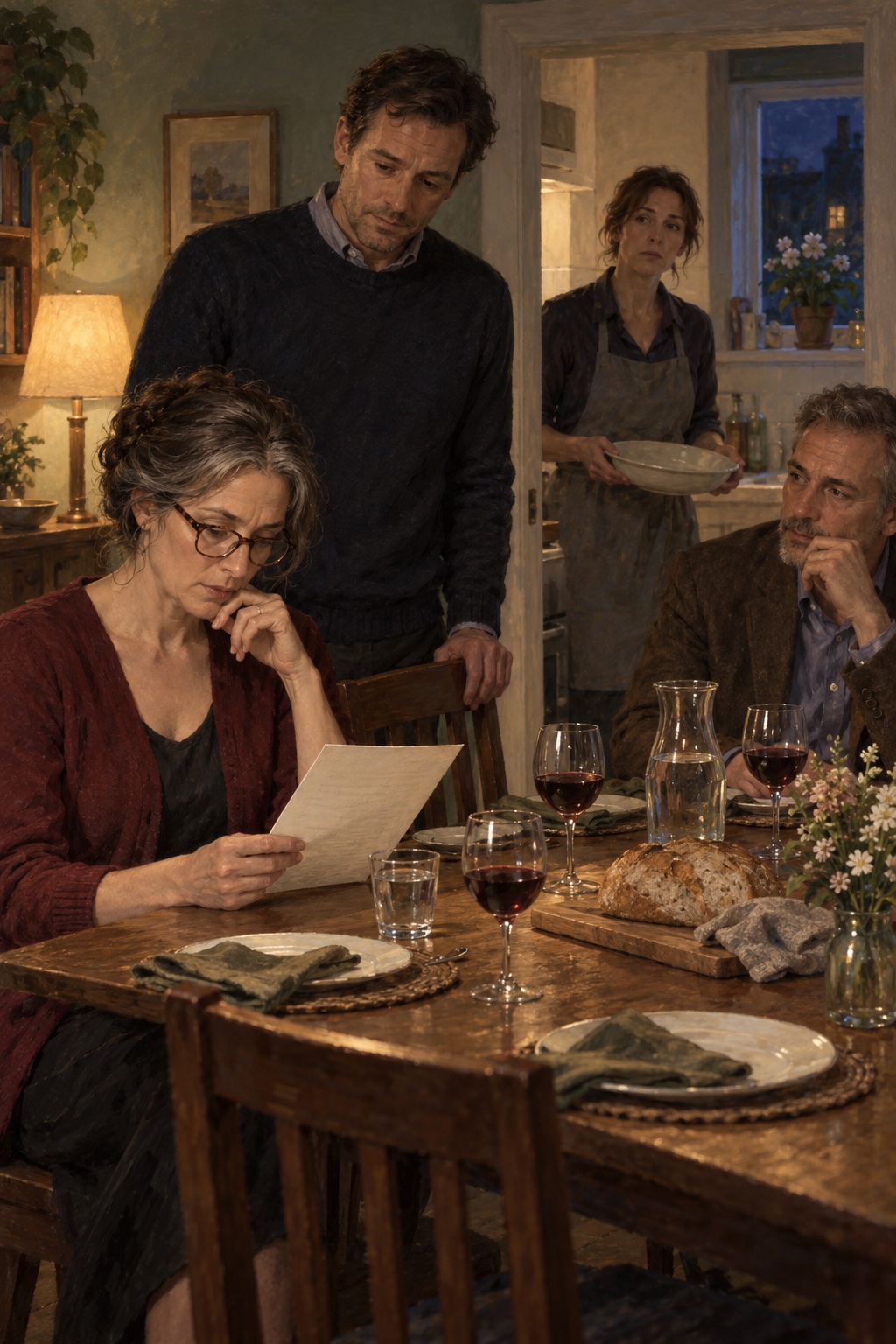
Corin's screen announced four. The man with the bin, number three, stood up. A clerk explained that three had been called twice while he was outside answering his doctor's telephone call. His folded card could not report his movements. He said he had told Corin about the appointment. Corin remembered, too late, and asked the clerk to take him next. The woman holding four made room, then asked what the arrangement would be if she went outside. For the first time that morning, nobody took a number from the dispenser. A visitor had been summoned by a system whose rules he had never heard, and everybody else had noticed.
Damaris lowered the volume of the screen. She asked people to tell reception if they needed to step outside; reception would mark their return rather than treating silence as departure. Corin wrote that instruction in large letters on a spare sheet. It was less elegant than the screen and more immediately useful. As he placed it beside the dispenser, Kit came to return the pen. "Where do I hand this in?" she asked. Hester pointed to the instruction at the bottom of the form: at the depot, before twelve. "They sent me here." "For the form," Corin said. He heard the correction in his own voice. Kit heard it too.
Her depot lay on the far side of the river, in the direction opposite her first delivery. She had assumed the completed application could be accepted here, not merely printed. The centre had permission to record enquiries; it could not receive every department's formal applications. Corin fetched Damaris. She called the depot supervisor, who agreed to accept this particular form by email if the original was brought later. Hester scanned it, Kit checked the attachment and received confirmation from the depot before leaving. It was a practical exception, dependent on a supervisor being available. Damaris told Corin to record it as such. A successful morning would not make that exception a general service.
The Remaining Question
At ten twelve, Hester was still working on Mr Lobb's enquiry between other visitors. Damaris offered to put his file aside and call him that afternoon, even if she had no decision to report. He asked whether he would have to start at number one again. "No," she said, and wrote the call and its time in the record. He finally put the blue card beside Hester's keyboard. Outside, his daughter had arrived with the car. She listened to what had happened, asked to see the list of documents and read it before helping him fold the folder shut. Corin held the door. Neither thanked him for opening it, though they thanked Hester for the list.
The councillor asked Corin for his report by five. She had another appointment, and had stayed longer than expected. "Will you describe the delay?" he asked. "Which one?" He meant the opening; she meant the people who had waited months. He told her he would distinguish them. She said she would look forward to reading it, a sentence that admitted several interpretations. Damaris was occupied with a resident who spoke very softly. Corin had time to go to his temporary desk, open the prepared report and inspect the sentence he had written before any visitor arrived: The centre delivered immediate answers from its first morning of operation.
He could defend it. Kit had left with a usable form, the man with the bin had a collection date, and several visitors had received addresses. Even Mr Lobb had learned something. Corin moved the cursor into immediate, then out again. He could make the sentence less vulnerable by changing a single word, leaving the whole account more or less as it was. Instead he opened his notes and began with nineteen numbered cards. He recorded the unannounced rule about missed turns, Kit's assumption and the exception that had allowed her application to be sent. He asked Hester to check the description of Mr Lobb's file. She corrected received a response to received a reference number.
The report took longer than the demonstration would have done. Corin separated enquiries recorded, questions answered and decisions still outstanding. The columns refused to produce a single handsome total. Damaris drew a line beside questions answered. "The addresses were answers," she said. "They'd come here to find them." He had counted them, but in the notes, where they looked incidental. "You're making a useful service look like an unsuccessful promise." She waited while he read the columns again. It would have been convenient to mistake her objection for a request to conceal the failures. Then he could have refused on principle and kept the satisfaction of being the only honest person in the room.
He moved the addresses into a separate column headed Next contacts provided. Neither of them could call that an approval of a stall, but neither could deny that it saved a journey. Kit's case remained under Exceptional arrangement. The two departments had still not accepted responsibility for Mr Lobb's application. "Leave that in," Damaris said. "We need them to see it." Corin revised the summary without returning to immediate. When she asked whether he meant to include his recommendation about the window, he had to admit that he had not written one. "You said you'd come back to the wording," she reminded him. Thursday's conversation returned with an unpleasant completeness. He proposed QUESTIONS START HERE, with the service description printed large enough to read outside. She asked him to order a proof before buying new lettering.
At four, the property office named the officer responsible for Mr Lobb's pitch. That officer had to inspect the site before deciding; the coming Thursday was the earliest available date. Damaris telephoned Mr Lobb and told him all three facts. He asked her to repeat the name and wrote it down. He was displeased about Thursday and relieved to have somebody to ask for. Both responses belonged in Corin's record, though neither fitted a tick box. The decision remained outstanding. He sent the report at four forty-seven, with the revised wording as an attachment, and left the question of his own employment out of it.
The centre closed at five. Corin collected a dropped glove, straightened the chairs and found number one beneath Hester's keyboard. She had kept it there since Mr Lobb left, to remind herself which enquiry had not been completed. The hat from the morning was gone; the folder was gone; the small blue rectangle remained. "Should I put it back in the pack?" he asked. "I haven't finished with it," she said. He set it beside her telephone instead. In the street, a man paused to read the window and then looked through the glass. Corin took a blank sheet and wrote what the centre could do, in the order the visitors would encounter it. Tomorrow the printer would bring a proof. He taped the sheet below the white lettering, stepped outside and crossed the road to see whether it could be read.